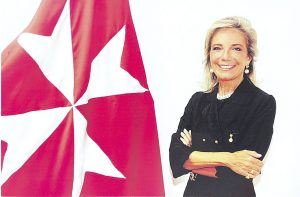
INTERVIEW WITH THE AMBASSADOR OF THE ORDER OF MALTA, MARIA EMERICA CORTESE
‘A country scarred, but rich in projects of hope’
By our special correspondent in Beirut
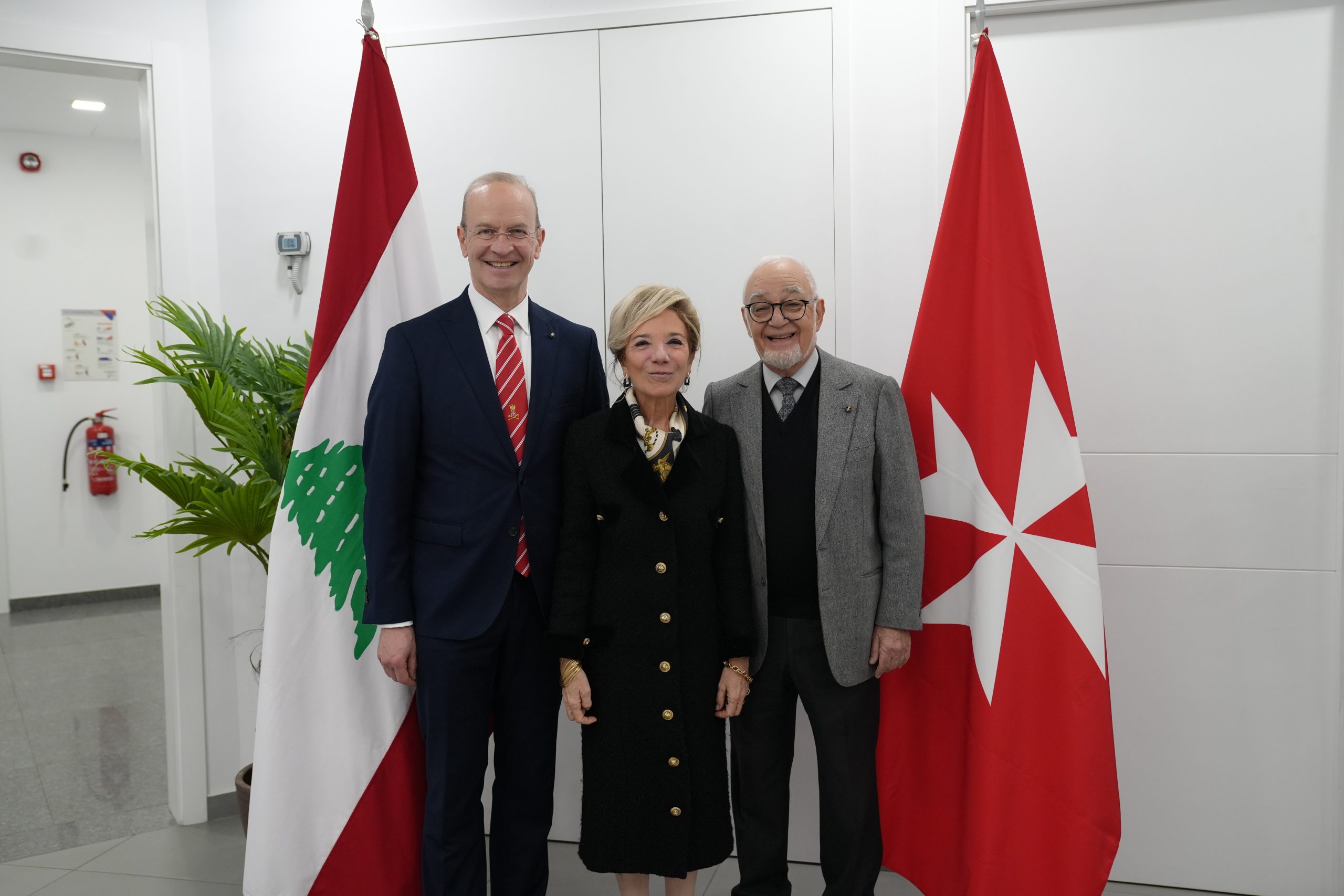
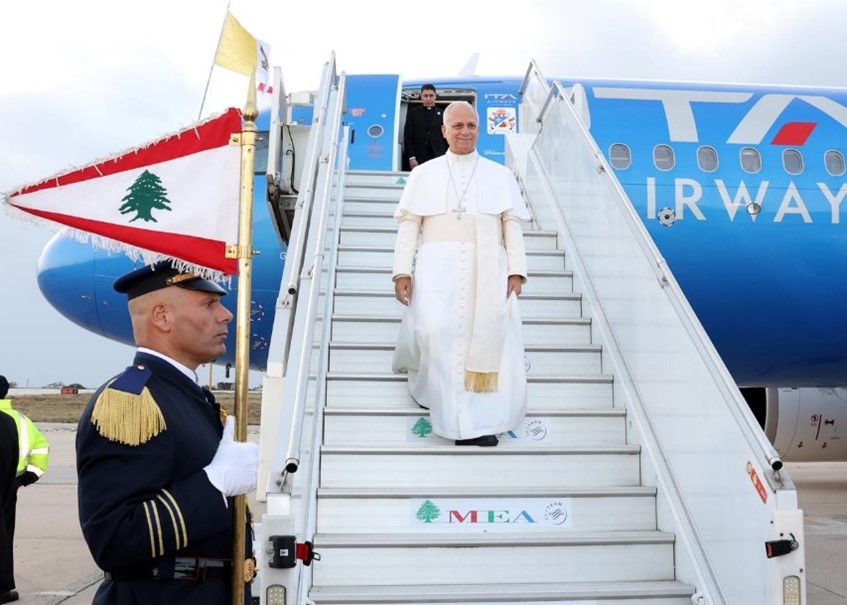
She defines Lebanon as a ‘wounded country’. First, because of ‘the war, which has been going on since 1975’. And secondly, because of the ‘economic crisis’. But it is also a country that can testify that ‘coexistence between different faiths is possible’, explains the Ambassador of the Order of Malta, Madam Maria Emerica Cortese. “This is an extraordinary message that comes to us from Leo XIV and his visit here. For in a land that is wounded but rich in signs of hope, he says: “Blessed are the peacemakers”, as the motto of his apostolic journey rightly indicates.
She feels personally challenged by the words chosen by the Pope. Indeed, the eight points of the cross of the Order, one of the oldest charitable institutions in the world, refer to the Beatitudes, including the one mentioned by the Supreme Pontiff. ‘Leo XIV,’ continues the Madam Ambassador, ‘reminds us that we need people of peace. This is true for Lebanon, but it is true for the entire Middle East and the whole world.’
A year ago, a ceasefire marked the end of Israel’s war. What kind of country does the Pope find?
It is a country where new prospects are opening up. After two years of vacuum, it finally has a president of the republic: he is very well prepared and attentive. And there is an excellent government: it did not come out of the ballot box, but it is of a high caliber. Admittedly, the situation, especially in the south, on the border with Israel, continues to be problematic.
The south has been devastated. And the attacks continue.
This is an area mainly populated by Shia Muslims, but there are also many Christian villages, which have been bombed for the first time and in some cases even destroyed.
As the Order of Malta, we have been active with our mobile units to provide health care to the entire affected population: children, the sick, the elderly, pregnant women, they saw us at their side under the bombardment. In managing the operations, we were supported by both the Lebanese army and the UNIFIL mission. This is why we are concerned about the withdrawal of UN troops from the south of the country, as they are a stabilizing factor.
Is Lebanon still under the influence of external powers?
Its geography makes it a small nation sandwiched between countries with conflicting ambitions, in a highly unstable regional context. Even the choice of the new president was shared among international meetings attended by France, Saudi Arabia, the United States, Egypt and Qatar. Since 1975, i.e. since the start of the civil war, Lebanon has experienced extremely difficult events and must rebuild its economy and consolidate its institutions.
Yesterday, Pope visited the port of Beirut, where an explosion killed 200 people in 2020. What remains five years later?
It is a symbolic site of social upheaval. What happened at the port compounded the collapse of the economic system and the Covid pandemic. All of this plunged the country into poverty: 40% of the population could no longer afford basic necessities. Economic difficulties persist, but the problem is now political. If the new ruling class manages to create a climate of confidence that will persuade the International Monetary Fund and Western countries to grant aid, Lebanon will be able to get back on its feet.
Then there is the issue of refugees.
There are two million Syrians and 850,000 Palestinians in a country with a population of four million. With the new course of al-Sharaa in Syria, we can expect a kind of counter-exodus, but returns home are still rare. As the Order of Malta, we are involved in refugee camps with our mobile medical unit to treat those living in difficult conditions.
Does the Order have deep ties with Lebanon?
We have had diplomatic relations since 1953. And we are present with one of the largest and most active associations of the Order. There are sixty active programs. We have the second largest healthcare center in the country and eleven community centers. We excel in agro-humanitarian projects that are at the forefront in the Middle East.
And then there is the social sphere: from educating children to assisting the elderly. These are seeds of hope and peace. Because, for example, in our clinics, you can see Shia and Sunni staff working alongside Christian staff, and they all proudly wear the uniform with the cross of the Order of Malta.
Does Lebanon, thanks to its particular Constitution, remain a model of interfaith dialogue?
There are 18 religious communities in the country, including Christians, Muslims and Jews. Some would like to amend the Constitution, which is based precisely on reciprocity between religious denominations. That would be a mistake. Even the wars that tore the nation apart were not caused by religion, but by external factors. Because of the message of brotherhood it conveys, the popes and the Holy See have always paid particular attention to Lebanon. Leo XIV reaffirms this and makes it a ‘pulpit’ for calling for peace, inviting the faithful to come together. For, as history teaches us, the Church can truly bring opposing parties together and achieve what politics cannot.
“Lebanon proves that coexistence between religions is possible. Wars?
They are the result of external factors.”
Giacomo Gambassi